James Cowper Kreston LLP

Multiple Pensions Workshop

As a reminder of the workshop, please refer to the following information.

Three Key Messages

1. GATHER THE RELEVANT INFORMATION

As per the ‘Preparation’ for this session, the first step is to establish the type(s) of pension arrangements that you have. The workshop gives more information (high level) on the different types:

Defined Contribution (otherwise known as ‘Money Purchase’)

A fund based on:

Contributions paid into the plan Plus Potential investment growth Less Charges

Examples: Personal Pension or a Self-Invested Personal Pension (SIPP). The James Cowper Kreston LLP scheme is a Group Self-Invested Personal Pension.

Provider: A Pension Provider (e.g. Aviva, Standard Life, Aegon, Royal London etc.)

Defined Benefit

A guaranteed income at the Scheme Normal Retirement Age

(The member has no involvement in the investment of the pension fund)

Examples: Final Salary or Career Average Earnings (CARE)

Provider: The pension is funded by the Employer. The scheme could be managed ‘in-house’ i.e. will have a Pensions Department, but will often be managed by a Third Party Scheme Administrator.

2. ADVICE VERSUS GUIDANCE

Guidance

  • Guidance is an impartial service which will help you to identify your options and narrow down your choices but will not tell you what to do or which product to buy; the decision is yours.
  • Providers of guidance are responsible for the accuracy and quality of the information they provide but not for any decision you make based on it.
  • Guidance is free unless your provider clearly tells you otherwise.
  • It will suggest what you could do.

Advice

  • Advice will recommend a specific product or course of action for you to take given your circumstances and financial goals. This will be personal to you, based on information you provide.
  • Advice will be provided by a qualified and regulated individual or online by a regulated organisation.
  • Providers of advice are responsible and liable for the accuracy, quality, and suitability of the recommendation that they make, and you are protected by law.
  • You will usually pay a fee for advice. Fees will be disclosed before you are asked to commit yourself.
  • It will recommend what you should do.

The Consumer explanations of “advice” and “guidance” Final Report March 2017, prepared by the Financial Advice Working Group for HM Treasury and the Financial Conduct Authority, included the explanations above.

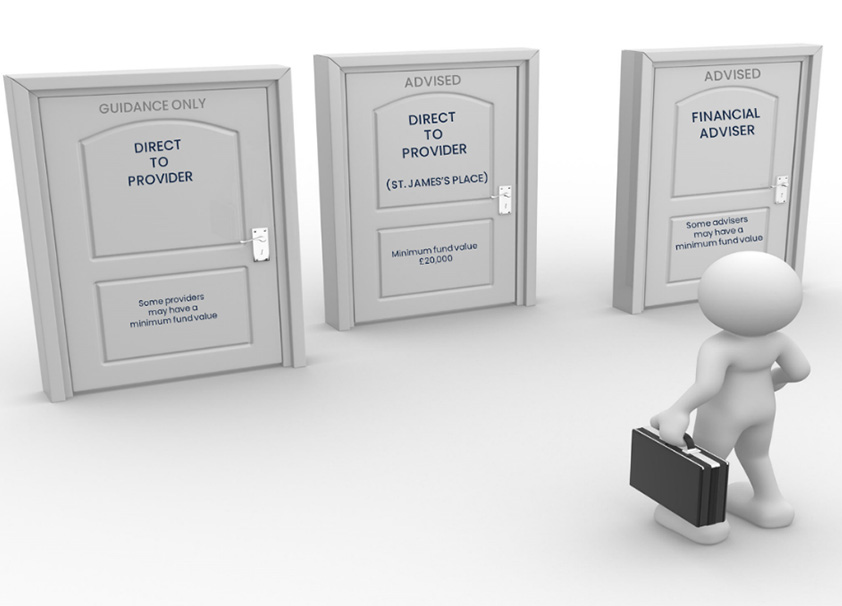
So, it is very important that, when dealing with an Adviser or Pension Provider, to check whether this is on a ‘Guidance’ or ‘Advice’ basis.

3. THE OPTIONS YOU HAVE

Your decision as to which option you want to take may depend on the complexity of your pension arrangements e.g.

  • If you have any Safeguarded / Protected Benefits.
  • The amount of the Fund Value e.g. may not be cost effective to pay a Fee to a Financial Adviser if a small value.

For example, Aegon may advise in respect of benefits you may wish to keep:

  • A protected tax-free lump sum. You can normally take 25% of your pension as a tax-free lump sum. This benefit allows you to take more than 25%.
  • Protected pension age. This gives you the right to access your pension before the age of 55 (increasing to 57 in 2028). There may be exceptions to this, for more information see the benefits and features.
  • Fund guarantees or bonuses. These can include a guaranteed growth or bonus rate, a loyalty bonus or a fund bonus.
  • Protection. This can include life cover, critical illness cover or waiver of premium.

Please check with Aegon whether using their Transfer Service is on a Guidance (non advised) or an Advice basis.

The value of the pension will be directly linked to the performance of the funds you select and the value can therefore go down as well as up. You may get back less than you invested.

The levels and bases of taxation, and reliefs from taxation, can change at any time. The value of any tax relief is dependent on individual circumstances.